饭局的诱惑
Designation of Deutsche Bank as yuan-clearing bank in EU adds impetus to broader trade_我的网站

A |

A concept photo of currencies and financial market Illustration: VCG
The designation of Deutsche Bank, a key and influential bank in Europe, to serve as the yuan-clearing bank will greatly facilitate and expand the use of the yuan in the EU market, providing more impetus to broader China-EU economic and trade ties, a Chinese analyst said on Tuesday.
The People's Bank of China (PBC), the central bank, announced on Monday that it had decided to authorize Deutsche Bank to serve as the yuan-clearing bank in Frankfurt, Germany, based on a memorandum of understanding with the Deutsche Bundesbank.
The move came as China-EU trade and economic ties continue to deepen and bilateral trade continues to expand, despite recent restrictions imposed by the European Commission.
In a statement sent to the Global Times on Monday, Deutsche Bank said that following the appointment by the PBC, it will facilitate direct end-to-end processing, clearing and settlement services for cross-border yuan transactions for European financial institutions and businesses, acting as a local bridge to China's payment systems.
Deutsche Bank, a global systemically important bank as well as the world's largest euro-clearing bank, said that it is the first foreign bank in Europe to receive this designation.
"Securing yuan-clearing capability in Europe reinforces our role as a trusted global clearing partner and our long-standing support for yuan internationalization. It strengthens China-Europe financial connectivity and enhances our ability to support clients' cross-border trade and investment flows with greater choice and flexibility," Alexander von zur Muehlen, CEO of Asia Pacific, Europe, Middle East & Africa and Germany at Deutsche Bank, said in the statement.
Xi Junyang, a professor at the Shanghai University of Finance and Economics, told the Global Times on Tuesday that while a number of Chinese banks are already performing yuan-clearing functions in the EU, the addition of Deutsche Bank, with its deep roots in the local market, carries great significance.
"Banks have different client bases, and Deutsche Bank has many European companies as its customers. With the appointment, these market participants enjoy a far greater degree of facilitation and ease in tapping yuan use cases," said the professor.
Companies and financial institutions can also avoid risks of foreign exchange losses as they can now directly choose yuan-euro settlement and bypass the use of a third currency, the expert said, noting that China-EU trade and investment ties will be one step closer with a local clearing bank coming onboard.
Tian Lihui, dean of the Institute of Financial Development at Nankai University, told the Global Times on Tuesday that the latest development, some 12 years after the first-yuan clearing bank form a Chinese bank was set up in Frankfurt, marked a milestone as the yuan-clearing system in Europe has evolved from a model where "Chinese entities handle clearing for Europeans" to one where "Europeans handle yuan-clearing themselves."
The decision by one of Europe's largest domestic banks to integrate into the yuan-clearing system signals that China-Europe financial cooperation is moving beyond the shallow level of facilitating trade settlements into the more substantial level of jointly building financial infrastructure, Tian said.
For both China and Europe, this move represents a mutually beneficial institutional alignment, Tian said. "China gains greater depth in the offshore yuan market, while Europe secures an additional strategic option amid the contest of major currencies."
Brussels has recently been intensifying its use of restrictive trade and regulatory tools across sectors ranging from clean technologies to digital infrastructure and foreign subsidies, with many of these measures seen as directly affecting Chinese firms and adding strain to China-EU economic relations.
However, despite these moves, deepening industrial and supply chain integration and the strong complementarity of the two economies have continued to push bilateral trade to new highs. In the first seven months of 2026, China's total trade with the EU stood at 3.67 trillion yuan ($543.90 billion), up 9.5 percent year-on-year, data from China's General Administration of Customs showed on Friday.
As China-EU economic and trade ties continue to expand and deepen, demand for the yuan to be used in the EU market will rise proportionately, and more EU banks will likely be authorized to serve as yuan-clearing banks, Xi Junyang said.
Financial cooperation between the world's largest trading bloc and the largest trading nation has accelerated in recent months. In May, the PBC renewed and expanded a bilateral currency swap agreement with the National Bank of Serbia, increasing the value of the swap from 1.5 billion yuan to 5 billion yuan.
Almost 80 percent of the surveyed Chinese companies operating in the EU plan to expand their investment, even amid tightening policies in the EU and an increasingly complex business environment, according to a report published by the Chinese Chamber of Commerce to the EU and the China Economic Information Service in March. Fostering cooperation in emerging industries and cross-border finance have been highlighted by industry insiders as new growth drivers of China-EU trade and economic cooperation.
The yuan accounted for 3.1 percent of global payments in June, rising from 2.75 percent in the previous month, and ranking as the fifth most active currency for global payments by value, according to a report from the Society for Worldwide Interbank Financial Telecommunication. In terms of trade finance, the yuan ranked second with a market share of 8 percent.
。
8月24日,“活力中国调研行”山东主题采访活动情况介绍会召开,会上披露山东文旅市场最新运行数据与下半年重点工作部署。数据显示,今年以来山东文旅产业复苏势头稳健,消费市场呈现业态升级、供需两旺的良好态势,演出经济、研学旅游、交旅融合等新兴业态持续释放消费活力。
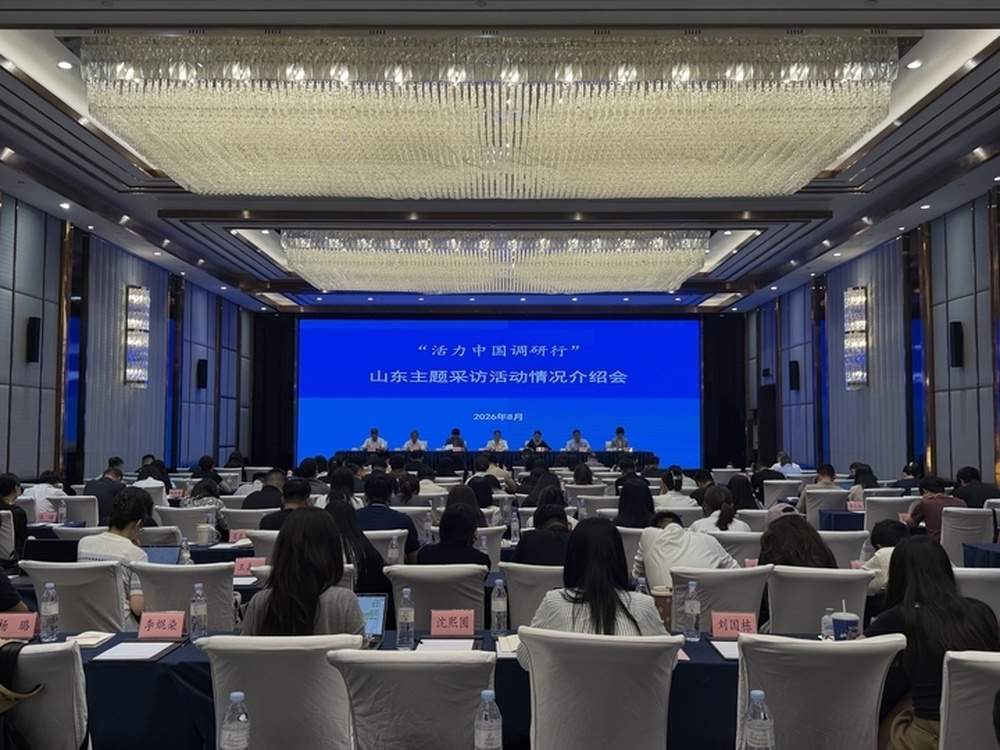
数据显示,1至7月,山东文旅市场内外客源同步增长。全省接待国内游客5.3亿人次,同比增长6.6%,实现国内旅游收入6592.9亿元,同比增长6.1%;入境游市场复苏态势显著,接待入境游客122.3万人次、增长44%,入境旅游收入8.3亿美元、增长43.1%。 政策赋能与常态化促消费活动是拉动文旅市场升温的重要支撑。据悉,山东已连续7年召开全省文旅产业高质量发展大会,配套出台专项激励政策,省级财政每年安排2000万元“引客入鲁”奖励资金,针对入境包机、旅游列车、省外营销推广等业态给予精准奖补。 依托16市联动机制,山东常态化开展四季文旅消费促进活动。上半年,全省累计举办各类文旅促消费活动近1.2万场,超1.2亿人次参与,直接带动消费超148亿元。

B | 针对暑期旅游旺季,山东推出3700余项滨海休闲、乡村避暑、亲子研学等特色文旅产品。下半年,山东还将围绕秋冬登山赏秋、美食康养、温泉滑雪等消费热点,持续推出系列主题活动,打造“季季有主题、月月有活动”的常态化促消费格局。 演出经济成为山东文旅场景消费的全新增长引擎。

C | 今年以来,山东持续引入大型演艺活动、培育本土演艺精品,拉长文旅消费链条。截至8月16日,全省已举办营业性演出3676批次,其中大型演出53批次。此前青岛举办的时代少年团演唱会,吸引全国近17万名歌迷赴青,斩获1.4亿元票房,成为大型文体活动带动城市文旅消费、检验城市治理能力的典型案例。

D | 后续国庆假期,济南、青岛还将陆续举办凤凰传奇、周杰伦等大型演唱会,持续激活假日文旅市场。为盘活演艺、赛事等流量资源,山东创新上线“鲁票票”智慧票根平台,整合全省1300余家文旅商户、1600余项专属优惠,游客凭演出、赛事、展览、交通等各类票根,即可领取优惠礼包,构建全域票根经济消费生态圈。目前,全省常态化落地的旅游演艺项目已超150个,《丝路千古情》《国士捍山河》等新晋本土演艺项目广受市场青睐,“跟着演出去旅行”成为文旅消费新潮流。 依托丰富的自然与文化资源,山东正标准化、体系化推进研学旅游提质升级。作为中华文明重要发祥地,山东拥有4处世界文化遗产、3500余公里海岸线,叠加庞大的在校生群体,研学旅游市场潜力突出。目前山东从产品、人才、标准、品牌、政策五方面发力,规范研学产业发展,通过打造差异化研学名课、建立导师持证上岗制度、出台全链条服务规范、升级“好客山东·见识齐鲁”品牌体系,同时对省外研学旅游列车、海上游船团队给予阶梯式补贴,深耕本土市场、拓展跨省研学版图。

E | 交旅深度融合是山东文旅产业创新发展的特色亮点。山东深入实施“交旅1号工程”,以“好客山东·齐鲁1号”主题列车为核心,打造泰山黄河、文物研学、文化润疆、非遗等多款特色主题列车,其中文物研学主题列车串联5市7站32家文博场馆,打造“铁轨上的移动博物馆”。截至目前,“齐鲁1号”旅游主题列车累计运送旅客126万人次,实现从单一交通产品向复合型文旅文化载体的升级。

F | 海上文旅板块同步扩容,继去年“好客山东·半岛1号”航线成功运营后,今年山东新增9条海上精品航线、18艘配套船舶,覆盖青岛、烟台、威海等5市,主打红色研学、生态探访等特色业态,并配套引客奖励政策。据悉,山东正统筹推进铁路、海上、自驾、公路内河、水上多元交旅业态,构建立体化文旅产品体系,其中备受关注的“运河1号”将于9月下旬开通济宁至枣庄三条首发航线,激活大运河文旅资源活力。
Current article:http://7mn7.xiaqingzhuangdaminnan.cyou/news/20260826_824323.html
Published on:17:35:30